Most homeowners don't go looking for a repiping project — they arrive at it. Usually it's after a string of pinhole leaks in galvanized pipe, a polybutylene scare from a home inspection, or one too many plumbing repairs that all point to the same underlying cause: the supply lines themselves are the problem, not any one fixture. If you've been reading our posts on aging pipe materials, you already know why a repipe sometimes makes more sense than another round of patches. This post is about what actually happens once you decide to do it.
A whole-home repipe is a real project — not a weekend job — and homeowners who go in with accurate expectations handle it a lot better than homeowners who assume it's "just like replacing a faucet, but bigger." Here's the honest version of timeline, mess, and cost.
What "whole-home repipe" actually means
A full repipe replaces all of a home's water supply lines — the pipes that bring fresh water to every fixture — with new material, almost always copper or PEX. It does not typically include drain, waste, and vent (DWV) lines unless those are separately identified as a problem; most repipe projects are scoped to supply lines because that's where galvanized and polybutylene failures concentrate.
The job touches nearly every room with a fixture: kitchen, bathrooms, laundry, water heater, hose bibs, and the main line from the meter or shutoff into the house.
The timeline: plan for days, not one
For an average single-family home, a whole-home repipe typically runs 3 to 7 working days, depending on the home's size, number of fixtures, and how accessible the existing pipe runs are. A few things stretch or compress that window:
- One-story homes with a crawl space or basement tend to go faster, because most of the new piping can run below the floor without opening walls.
- Multi-story homes with pipes run inside walls and between floors take longer, because more drywall has to come down and go back up.
- Homes with finished basements or extensive tile work add time, since those finished surfaces need extra care — or removal and replacement — to access pipe runs.
- PEX installations are often faster than copper, since PEX is more flexible and requires fewer joints and less soldering.
The work itself usually breaks into three phases: removing old pipe and running new lines (the bulk of the time), inspection and pressure testing, and patching/repair of any walls or ceilings that were opened. That last phase is sometimes handled by the plumbing contractor and sometimes handed off separately — worth clarifying before the project starts.
The mess: real, but manageable
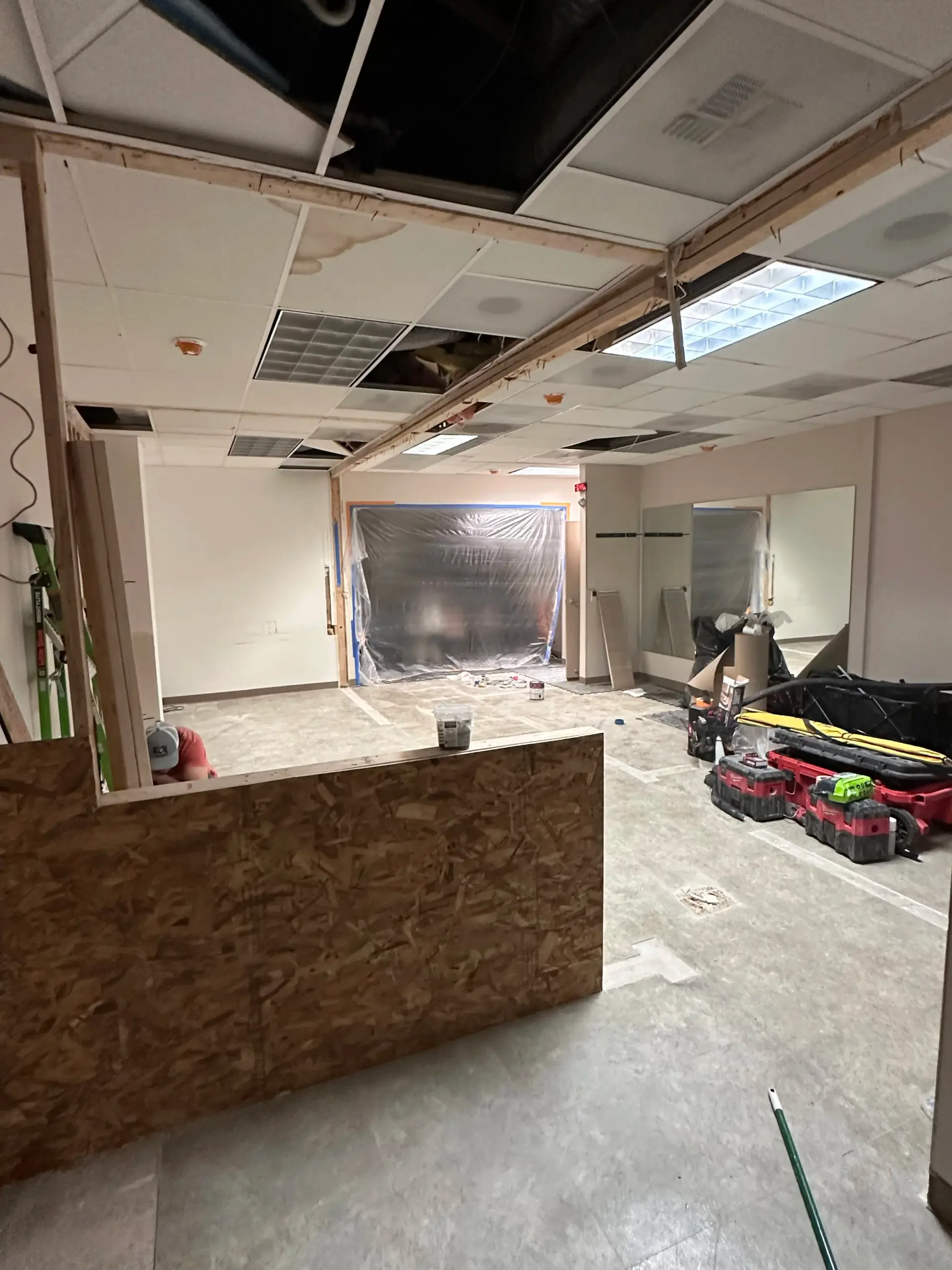
This is the part homeowners underestimate most. A repipe involves cutting into walls and sometimes ceilings to reach pipe runs that aren't accessible from a crawl space or basement. Expect:
- Dust and debris from drywall cuts, even with containment measures in place
- Temporary water shutoffs, sometimes for stretches during the day
- Limited or no use of certain bathrooms or the kitchen sink at points during the project
- Furniture and belongings needing to be moved away from work areas
A reputable contractor will protect floors, seal off work areas, and clean up at the end of each day — but "manageable disruption" is still disruption. Most homeowners either stay elsewhere for a portion of the project or plan around having at least one working bathroom and water source at all times, which a good contractor can usually arrange by sequencing the work room by room rather than shutting off the whole house at once.
What drives the cost
Repipe costs vary enough between homes that a single number isn't useful — but the variables that move the price are consistent and worth understanding before you get a quote:
Home size and number of fixtures. More bathrooms, more water-using appliances, and more total square footage all mean more pipe, more fittings, and more labor hours.
Pipe material: copper vs. PEX. Copper costs more in materials and labor — it requires soldered joints and more skilled installation time — but it has a long track record and some homeowners prefer it for that reason. PEX is generally less expensive and faster to install, with its own long track record in residential plumbing. Neither is the "wrong" choice; it's a trade-off worth discussing directly with your plumber rather than defaulting to whichever is cheaper.
Accessibility. A home with an open crawl space is far cheaper to repipe than a home where every run is buried in finished walls and ceilings. This is often the single biggest cost swing between two homes of similar size.
Number of stories. Multi-story homes require more vertical runs and more wall penetrations between floors, which adds both material and labor.
Wall and ceiling repair scope. Opening drywall is often unavoidable, and patching it back — framing, drywall, texture, and paint — is frequently priced separately from the plumbing work itself. Ask explicitly whether a quote includes this or whether you'll need a separate contractor for finish repairs.
Permits and inspection. Repiping typically requires a permit and inspection in Washington, which adds a modest cost and a bit of schedule time but isn't optional — and it's worth being wary of any contractor who suggests skipping it.
Access to the water heater and main shutoff. If those also need attention or relocation as part of the project, that adds scope beyond the standard repipe.
What a fair estimate should spell out
Because the variables above swing the price so much, a trustworthy repipe estimate should specify material (copper or PEX), which lines are included (supply only, or supply plus other work), whether drywall patching is included, and whether permitting is handled by the contractor. If you want a deeper walkthrough of how to evaluate an estimate line by line, our post on how to read a contractor's estimate covers exactly that, and applies directly to a project this size.
Is a repipe actually the right call?
Not every aging-pipe situation needs a full repipe immediately. If you're still weighing whether your home's plumbing has crossed the line from "monitor it" to "replace it," our post on repair vs. replace for aging building systems walks through that budgeting decision in more general terms, and it applies well to plumbing specifically.
If you've already concluded a repipe is coming, the best next step is a straightforward, written estimate that spells out material, scope, and timeline before any pipe gets cut. Our plumbing team handles whole-home repipes across Seattle, Bellevue, Kirkland, Bothell, Mercer Island, Issaquah, Sammamish, and Redmond, and can walk your home in person to give you an honest read on scope and cost before you commit to anything. Reach out through /contact or call (425) 999-1091 to get started.